
AI is built on data, which means decisions about data are also decisions about power, representation, and self-determination. Indigenous data sovereignty is the fundamental right that Indigenous Peoples have over data about their Peoples, lands, cultures, languages, and communities. Explore what Indigenous data sovereignty means in practice, why it matters for AI, and how it can protect knowledge and guide technology use.
Indigenous Data Sovereignty in the Age of AI

What is Indigenous Data Sovereignty? And Why Does it Matter for AI?
Indigenous data sovereignty is something Indigenous Peoples worldwide have always understood: that information about them belongs only to them, and that the relational responsibility to land, kin, and community extends to protecting their knowledge, too.
In the age of AI, where systems are built on data, trained on data, and make decisions based on data, asserting this right has never been more important.
Indigenous data sovereignty is the right of Indigenous Peoples to own, control, access, interpret, and possess data in ways that reflect their own laws, governance, values, and cultural protocols. It is not just about where data sits on a server. The real questions are:
- Who decides what data is collected?
- Who collects it, and how?
- How is it used, shared, and protected?
- Who benefits from what the data reveals?
Learn more about Indigenous data governance frameworks such as the First Nations Principles of OCAP® and how they can support Indigenous control, stewardship, and decision-making over data.
Decisions about Indigenous data must reflect both individual and collective consent and privacy rights.
Why it matters for AI — Nothing about us without us
AI systems are built on data. They learn from data, make predictions from data, and generate outputs based on data. When Indigenous Peoples lack authority over their own data, they lose control over:
- How their communities are represented in AI outputs
- Whether AI systems serve or harm their interests
- Whether cultural knowledge is commercialized without consent
- Whether historical biases are embedded and amplified by new technology
Indigenous data sovereignty is not about blocking technology. It's about making sure technology serves Indigenous Peoples on their terms.
The Three Layers of Indigenous Sovereignty in the Digital Age
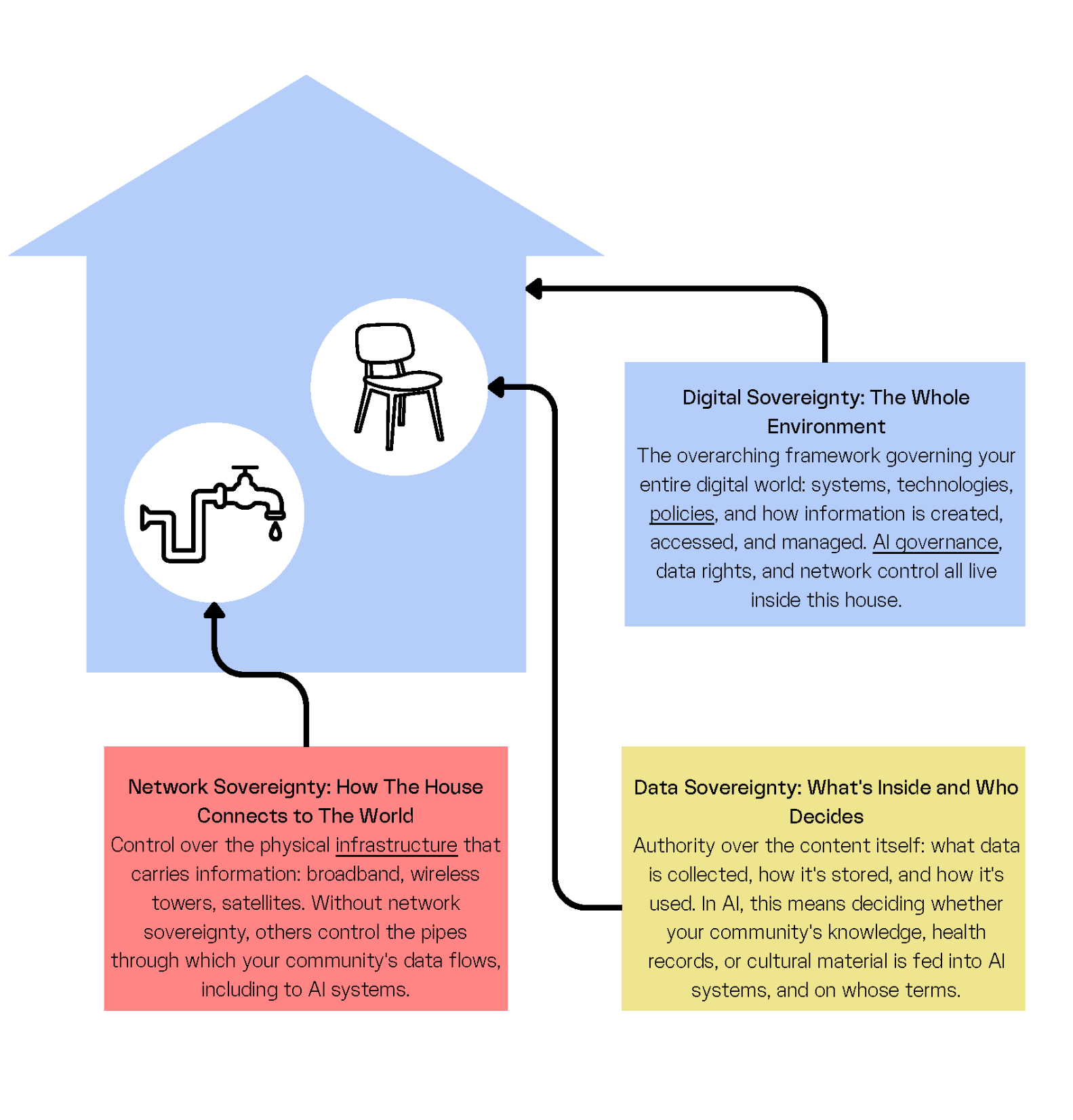
Indigenous sovereignty in the digital age operates across three interconnected layers. Understanding the difference helps Nations identify where they have control, where they don't, and where to focus their governance efforts, especially when making decisions about AI.
Why All Three Layers Matter For AI
A Nation or organization might have strong data sovereignty principles but no control over the network infrastructure that carries its data to cloud AI systems. Or they might own their broadband network but have no policy framework governing what AI tools staff can use with community health records. All three layers need attention — a gap in any one of them can undermine the others.
Community-owned infrastructure
Not all digital infrastructure has to be controlled by large corporations. Many Indigenous Nations are exploring community-owned alternatives that keep data within their jurisdiction, under Nation governance, and in service of community priorities.
Sovereign mini data centres
Smaller, locally operated facilities that store and process community data within Nation jurisdiction. Built and governed by the community, for the community.
- Data stays on local territory
- Governed by Nation laws and cultural protocols
- Builds local technical skills and jobs
What to consider first
Even smaller infrastructure has real-world impacts. Before building, Nations should consider:
- Land use and effects on local ecosystems
- Community consent and cultural landscape
- Reliable power and cooling requirements
- Initial investment costs
- Long-term maintenance costs and technical capacity
- Financial sustainability over the full lifecycle
Indigenous Data Sovereignty in Action
Data governance processes, policies and frameworks are how Indigenous Nations and organizations enact Indigenous data sovereignty. At its core, governance is about rules, roles, relationships, and responsibilities that guide how data is processed across different stages:
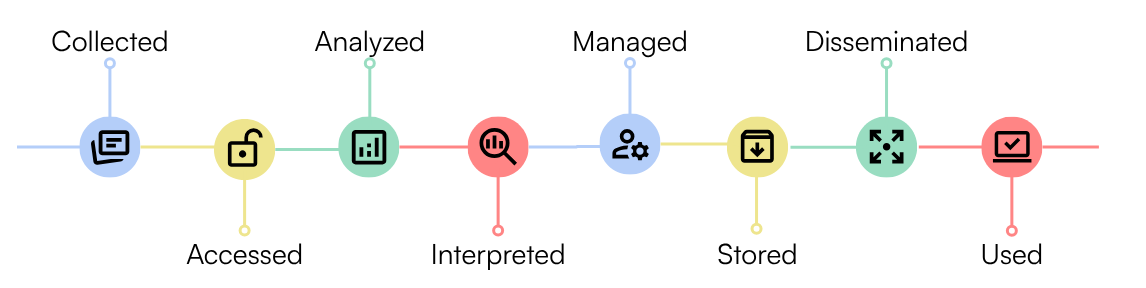
In practice, Indigenous data governance means two things working together:
- Indigenous Nations and organizations having control over their data, and
- Indigenous Nations and organizations having the tools, skills, and information needed to use data for decision-making and planning.
Together, governance of data and data for governance show that Indigenous data sovereignty is not only about protection. It is also about capacity, decision-making, and the ability to use information in ways that serve community priorities. In the context of AI, this means asking not only how data can be kept safe, but how it can be governed and used to strengthen Indigenous authority, planning, and futures.